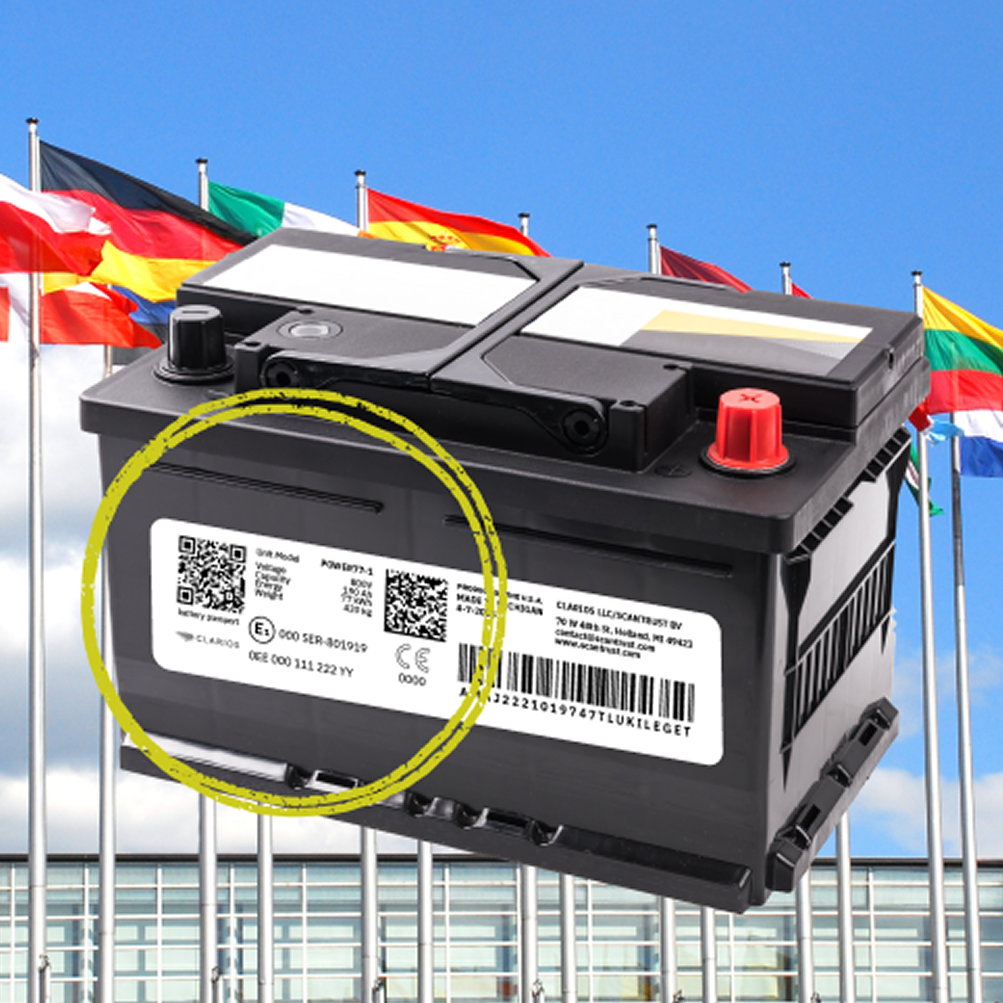
“Ecodesign for Sustainable Products Regulation” (ESPR) just doesn’t have the same ring as “battery passport” or its more general designation, the “Digital Product Passport”. It’s unfortunate, considering “product passport” delivers little clarity about what a product passport does or what it should contain. The battery passport, like any product passport, is a small requirement within a more comprehensive regulation that in turn is only a small part of the aforementioned ESPR. On the one hand, the ESPR is a testament to the massive and noble effort that the European Commission has undertaken to improve sustainability. On the other hand, understanding how the requirements affect specific industries feels like a burden, if only because the legalese and interconnected regulations make for tedious reading. Having a simple to understand date of applicability in February 2027 is some small solace as a starting place for battery producers trying to understand what compliance means for them.
For companies placing electric vehicles, light means of transport (LMT) vehicles, or industrial batteries over the 2kWh size threshold on the EU market, the latest regulations have been looming on the horizon for years. Many of those firms would have made their preparations for months, if not years, before the first quarter of 2027. After all, EU Battery Regulation 2023/1542 was already signed into effect on August 17, 2023, replacing the 2006/66/EC Battery Directive. The biggest change in the latest regulation is it takes a full lifecycle approach to batteries, covering raw material origin, carbon footprint, manufacturing methods, labeling, and end-of-life management. The digital battery passport is the mechanism making mandatory information available to regulators, recyclers, operators, and consumers. While other EU regulations don’t strictly require a QR code, the EU battery regulation explicitly requires that every battery product sold in the EU has a QR code. From the AAs fitted to television remotes to the 96 kWh accumulators fitted in high performance electric vehicles, all batteries are required to have a QR code. The requirement for what’s available through that code is, however, not the same across the board.
This article will explain what the battery passport is, which batteries require it versus which batteries need more basic information, what information must be provided, and how QR codes are used for delivering that information toward the goal of compliance.
Table of contents
EU battery regulation news: latest updates for 2026
Due diligence deadline postponed to August 2027
The due diligence obligations on critical raw materials (cobalt, lithium, nickel, natural graphite) were originally set to apply from 18 August, 2025. The European Commission announced a two-year postponement in May 2025. This was formalised with Regulation (EU) 2025/1561 in July 2025. Due diligence now applies from 18 August, 2027. The Commission was expected to publish official guidance by 26 July, 2026.
Industrial carbon footprint declarations now in effect
From February 18, 2026, carbon footprint declarations became mandatory for all rechargeable batteries with a capacity above 2 kWh. This followed the EV battery carbon footprint requirement that came into force in February 2025. Both declarations must be third-party verified, site-specific, and publicly accessible. Carbon offsets cannot be used to reduce reported figures.
New recycling efficiency rules adopted July 2025
In July 2025, the Commission published new delegated rules establishing harmonised methodology for calculating recycling efficiency and material recovery rates from waste batteries. This ensures recycling percentages are calculated consistently across all 27 EU member states and closes a longstanding gap in how recycling performance is reported.
DPP registry go-live July 2026
The EU DPP Registry was launched on July 20th 2026. This registry is for all products, not just batteries. Battery manufacturers will need to make an entry into the live registry from that point onward. The Commission plans to adopt a delegated act by August 2026 establishing access rights and rules for updating product passport data. Companies building their compliance infrastructure should factor these dates into their platform selection and integration timelines and be confident that their product passports are being prepared in the correct format or choose a vendor that has provided confidence in this regard.
Removability guidance issued January 2025
In January 2025, the Commission published harmonised guidelines (Commission Notice C/2025/214) on the removability and replaceability of portable and LMT batteries under Article 11 of Regulation (EU) 2023/1542, applicable from February 18, 2027. Existing exemptions cover wet environment appliances, implantable medical devices, hearing aids, and products requiring continuous power supply. Following 81 manufacturer applications, the Commission launched a public consultation in April 2026 proposing new partial exemptions for wearables and electric toys, with final adoption expected before the end of 2026. Companies selling battery-containing devices should verify their status before the February 2027 deadline.
What is the digital battery passport?
The digital battery passport is an electronic record linked to a battery through a unique identifier. It stores and provides structured access to information about the battery’s identity, material composition, manufacturing origin, carbon footprint, technical performance, and end-of-life handling requirements.
In practice, all of that data is accessed through a single QR code permanently affixed to the battery. Scan the code, and the passport opens. Without the code on the label, the data has no physical access point and the battery cannot legally be placed on the EU market from February 2027.
Digital Product Passports sit within the broader EU initiative being rolled out across product categories under the Ecodesign for Sustainable Products Regulation (ESPR). Batteries were chosen to lead this rollout because of their environmental impact, their dependence on critical raw materials including lithium, cobalt, nickel, and graphite, and their strategic importance to the EU Green Deal.
The EU battery passport includes materials and repairability data, just like the product passport requirements for other product categories, but also includes:
- State-of-health (SOH) tracking per individual unit (Article 77(2))
- Third-party verified carbon footprint calculations at the manufacturing site and batch level (Article 7)
- Recycled content declarations for critical raw materials (Article 8)
- Full supply chain due diligence documentation (Articles 48-51)
These additions reflect the complexity of the battery value chain and the EU’s ambition to make every stage of a battery’s life, from raw material extraction to end-of-life recycling, fully traceable and verifiable.
Source: Regulation (EU) 2023/1542, Articles 8, 48-51, 77 and Chapter IX (Articles 74-86)
The battery passport will share the same technical foundation as all other Digital Product Passports that already exist and will exist under the ESPR. Textiles, electronics, furniture, and construction products are all in scope under the ESPR Working Plan 2025-2030, with additional delegated acts expected from 2027onwards. The battery passport is one of the earliest concepts for this entire system. How it performs technically and operationally is widely expected to shape how DPP requirements are structured and enforced across product category requirements that follow. It’s worth noting that non-EU countries are either planning or rolling out similar schemes. For producers selling across regions with differing requirements, it is worth considering a standardized system that offers dynamic labeling.
Source: Regulation (EU) 2024/1781, Article 2 and Chapter III
Which batteries need an EU battery passport?
Not all batteries require a digital battery passport. The mandatory passport requirement from February 18 , 2027 covers three categories under Article 77(1):
- Electric vehicle (EV) batteries
- Light means of transport (LMT) batteries, including e-bikes and e-scooters
- Industrial batteries with a capacity greater than 2 kWh
Portable batteries below the threshold are outside the mandatory passport scope. However, this does not exempt them from the regulation. From February 18, 2027, every battery placed on the EU market, regardless of type or capacity, must carry a QR code providing access to basic product information under Article 13(6). The scope of data required at that level is much less robust than a digital product passport, including the distinction that unique IDs are unnecessary.
The economic operator responsible for placing the battery on the EU market, whether that is the manufacturer, an authorised representative, an importer, or a distributor, is responsible for ensuring the required information is delivered and accessible and that the data is accurate.
The QR code on a battery is a live link, not a one-time label. For EV batteries with lifetimes of 10 to 15 years, the data behind that code must remain accessible for the entire period the battery is in use. If the platform goes offline, the passport ceases to exist: regulators cannot verify compliance, recyclers cannot access dismantling instructions, and the code on the label cannot be updated or replaced. Under Article 77(3), the data must be accessible at all times, making platform uptime a compliance requirement, not a service quality consideration.
Sources: Regulation (EU) 2023/1542, Articles 13(6) & 77(1)
EU battery regulation timeline: key deadlines from 2024 to 2031
The battery regulation introduces requirements in a staggered fashion, with obligations phased in across multiple years. With the due diligence postponement via Regulation (EU) 2025/1561, related to Omnibus IV proposals, several dates have shifted. Here is the current timeline:
February 2024: EU battery regulation 2023/1542 enters into force
Regulation (EU) 2023/1542 became applicable across the EU from 18 February 2024. Batteries placed on the EU market must bear CE marking which is the mandatory conformity mark by which a manufacturer declares that the product meets all applicable EU requirements covering safety, performance, durability, labeling, and hazardous substances.
August 2025: 2006 Battery Directive repealed, EPR obligations begin
The previous Batteries Directive 2006/66/EC was fully repealed on August 18, 2025. Extended producer responsibility (EPR) obligations came into force, requiring battery producers to operate free take-back systems and meet collection targets.
February 2025 / 2026: battery carbon footprint declarations
EV battery manufacturers were required to calculate and declare carbon footprint per battery model and manufacturing plant from 18 February 2025 (Article 7). Industrial rechargeable batteries above 2 kWh followed from 18 February 2026. Declarations must be third-party verified at the site and batch level using JRC methodology.
August 2026: EU battery regulation labeling requirements
New physical labeling requirements apply from 18 August 2026, including capacity, chemistry, and hazard information. Any substance of very high concern (SVHC) present above 0.1% must be disclosed. Carbon footprint performance classes for EV batteries also apply from this date under Article 13.
February 2027: digital battery passport and QR code become mandatory
The digital battery passport becomes mandatory for EV, LMT, and industrial batteries above 2 kWh. Every in-scope battery placed on the EU market must have a QR code giving access to the passport. The QR code requirement extends to all batteries universally from this date under Article 13(6).
August 2027: EU battery regulation due diligence obligations apply
Following postponement via Regulation (EU) 2025/1561, supply chain due diligence obligations on critical raw materials apply from August 18, 2027 instead of the same date two years earlier. According to articles 47 and 48 of EU 2023/1542, companies above EUR 40 million net annual turnover must maintain a management system covering risk assessment across the supply chain for cobalt, lithium, nickel, and natural graphite. The reason that the applicability of the due diligence requirement was delayed is because of a separate proposal under discussion, part of what’s called Omnibus IV, that would exempt companies with a net annual turnover below EUR 150 million from the due diligence requirements entirely. This creates some obvious ambiguity for companies that are in between the requirement thresholds. Despite that, we recommend that companies prepare their due diligence regardless of the outcome, whether or not companies with turnover under EUR 150 million are exempt.
EU battery passport requirements: what data must it contain?
The data requirements for the digital battery passport are set out in Annex XIII of Regulation (EU) 2023/1542. For EV batteries, Article 77 and Annex XIII together define dozens of mandatory data attributes across four data groups. All of that data is accessed through the same QR code on the battery, with access rights determined by who is scanning and why. The regulation organises this into three access tiers:
- Publicly accessible data: sustainability information, carbon footprint, recycled content, end-of-life instructions, and the EU Declaration of Conformity.
- Legitimate interest access: state-of-health data, cycle count, detailed composition, and dismantling guides. Accessible to authorised technicians, recyclers, and current owners.
- Restricted access: accessible only to notified bodies, market surveillance authorities, and the Commission. Protects commercially sensitive manufacturing and supplier data.
Key data fields
Key data fields across the three tiers include:
- Unique battery identifier and manufacturer details (Annex XIII, point 1)
- Battery category, chemistry, and material composition (Annex XIII, point 2)
- Third-party verified carbon footprint at site and batch level, using JRC methodology (Article 7 and Annex XIII, point 3)
- State of health (SOH) and cycle count, updated when material changes occur such as repair, repurposing, or ownership transfer (Article 77(2))
- Recycled content declaration for cobalt, lead, lithium, and nickel (Annex XIII, point 4)
- Due diligence report on critical raw material sourcing (Articles 48-51, applicable from August 2027)
- End-of-life handling instructions and waste management information (Annex XIII, point 5)
- EU Declaration of Conformity (Article 18 and Annex IX)
When a battery undergoes second-life processing, for example an EV battery repurposed for stationary grid storage, it is treated as a new product. The operator responsible for repurposing must generate a new passport reflecting the battery’s altered state under Article 77(5).
Source: Regulation (EU) 2023/1542, Annex XIII; Article 7; Article 77(2); Article 77(5)
Battery passport QR code requirements under EU regulation 2023/1542
The QR code is the physical access point for the battery passport. Under Article 77(3), it must be printed or engraved visibly, clearly, and permanently on the battery itself, not on packaging. For EV batteries with expected lifetimes of 10 to 15 years, this permanence requirement has real implications for labeling materials and production processes.
The QR code must comply with ISO/IEC 15459 standards and must link directly to machine-readable battery passport data. A QR code pointing to a product marketing page or a generic website does not meet the requirement under Article 77(6). The encoded URL must be a unique, permanent address through which the complete passport data is accessible.
For batteries outside the full passport scope, such as portable batteries, Article 13(6) still requires a QR code from February 2027. The data accessible through that code covers general product information, the EU Declaration of Conformity, capacity for rechargeable batteries, and end-of-life handling guidance.
The EU DPP Registry under Article 78 is scheduled to go live in July 2026. From that point, unique battery identifiers can be registered and passports submitted to the Commission’s central database. Companies integrating QR code infrastructure should plan platform testing against the live registry from mid-2026.
Sources: Regulation (EU) 2023/1542, Article 13(6); Article 77(3); Article 77(6); Article 78
Who is responsible for the digital battery passport?
The Batteries Regulation places compliance responsibility on the economic operator placing the battery on the EU market. Article 3 defines four operator types:
Manufacturers producing batteries in the EU — such as a German company producing lithium-ion battery packs at a factory in Bavaria and placing them on the market under its own brand. The manufacturer holds primary responsibility for ensuring the passport exists, the data is accurate, and the QR code is compliant.
Authorised representatives of non-EU manufacturers — such as a legally registered EU-based entity designated by a Chinese battery manufacturer to handle Declaration of Conformity, battery passport registration, and market surveillance obligations on its behalf within the EU.
Importers bringing batteries from outside the EU — such as a Dutch trading company purchasing finished EV battery modules from a South Korean manufacturer and importing them for sale to European vehicle assembly plants. The importer takes on full compliance responsibility where the original manufacturer is outside the EU.
Distributors making batteries available on the market — such as a pan-European industrial supplies wholesaler purchasing batteries from an EU-based manufacturer and reselling them across multiple member states. The distributor must verify that batteries carry the required passport and QR code before making them available, but does not bear the same primary compliance burden as the manufacturer or importer.
In practice, this means compliance responsibility does not rest solely with manufacturers. Importers and distributors have their own obligations to verify that the batteries they handle carry the required identifiers, that the passport data is accessible, and that the QR code links to a valid and up-to-date passport.
Data ownership across multi-tier supply chains is one of the more complex aspects of the EU battery regulation. Manufacturers must obtain verified data from upstream suppliers (carbon footprint, material composition, recycled content), and this requires data-sharing agreements that may take months to establish. The operator placing the battery on the market is ultimately responsible for the accuracy and completeness of what is in the passport, even if the underlying data originates elsewhere.
Sources: Regulation (EU) 2023/1542, Article 3; Articles 38-42; Article 77(5)
How to prepare for the EU battery passport deadline in February 2027
Industry implementation estimates consistently point to 12 to 18 months as a realistic preparation timeline. With the February 2027 deadline now under eight months away, companies that have not yet started are already behind the recommended schedule.
A practical preparation framework covers four stages:
- Data gap analysis. Map your current data holdings against the Annex XIII field list. Identify which fields are available internally, which require supplier data, and which require third-party verification (particularly the carbon footprint calculation).
- Supply chain data agreements. Contracts and data-sharing arrangements with upstream suppliers are needed to obtain material origin, composition, and carbon footprint data. Target completion by mid-2026 to allow sufficient lead time.
- Platform selection and integration. Choose a platform capable of generating ISO/IEC 15459-compliant unique identifiers, hosting passport data in an interoperable format, managing tiered access controls, and linking that data to a QR code permanently affixed to the battery itself. The QR code is the physical output of the entire compliance workflow: without it on the label, the passport has no access point and the battery cannot legally be placed on the EU market. Integration with your existing ERP or PIM systems is also part of this work. Target late 2026 for this step to allow time for testing against the live EU Registry, which goes live in July 2026.
- Pilot and QA. Run pilot passport creation for representative products before the deadline. Establish QA procedures for dynamic data fields like state of health, which must be updated throughout the battery’s lifetime.
Key takeaways: EU battery regulation
- The digital battery passport QR code becomes mandatory on 18 February 2027 under EU Regulation 2023/1542 for EV, LMT, and industrial batteries above 2 kWh.
- A QR code is required on all batteries from the same date, including portable batteries outside the full passport scope.
- Passport data is structured in three access tiers: public, legitimate interest, and regulator-only. Commercially sensitive data is protected.
- The approximately 80 mandatory data attributes for EV batteries span chemistry, carbon footprint, recycled content, state of health, and supply chain due diligence.
- Due diligence obligations were postponed to August 2027 via Regulation (EU) 2025/1561. The EU DPP Registry goes live in July 2026.
- Companies should target supply chain data agreements by mid-2026 and platform integration by late 2026 to meet the deadline.
Meeting EU battery passport requirements using QR codes
The battery passport requirements for a QR code demand that the code be permanently affixed, ISO/IEC 15459-compliant, and linked to structured data that stays accurate across the battery’s entire lifetime. GS1-certified QR codes can be built to exactly these standards, giving manufacturers a compliant data carrier that is already trusted by brands and retailers selling in the EU market.
CIRPASS-2 is a European Commission pre-standardization initiative defining the technical architecture for Digital Product Passports across the EU. CIRPASS-2 brings together technology providers, including Scantrust, industry associations, standardisation bodies, and regulators to establish the interoperability frameworks, data models, and access control standards that are the basis for DPP systems across all product categories, including batteries. Any solution for compliance should be developed in direct alignment with where the standards are going, informed by the same working groups shaping the Commission’s implementation decisions. For companies looking for a solution, participation in European Commission standards development is a smart part of any check list.
For companies distributing batteries across multiple regions, the QR code that is part of establishing compliance in the EU should be functional and useful in all regions. The result should be that EU regulators and consumers can access Digital Battery Passports as required while buyers in other markets can be served localised product pages, warranty flows, brand content, or their own country’s mandatory particulars. No duplicate labeling. No parallel workflows.
QR codes can be used beyond simple DPP compliance
DPP compliance with a QR code on batteries is the requirement for batteries sold in the E.U. What you build on top of that compliance leaves you several opportunities. The same QR code that satisfies the regulatory requirement can also power consumer landing pages, warranty registration, sustainability information, and power loyalty programs.
GS1 Digital Link compatibility can also be built into battery passport QR codes. With GS1 Digital Link codes, products can be scanned natively across retail scanning systems just like legacy 1D barcodes. Logistics platforms and point-of-sale infrastructure can all be integrated without additional setup.
Companies with product diversion (grey market) or counterfeiting problems also have the option to use secure QR codes for multi-benfit compliance. Secure QR codes are standard QR codes with an added copy detection feature, resulting in a highly effective anti-counterfeiting feature.
Companies building their QR code and DPP compliance infrastructure on a platform designed for both compliance and commercial performance will get more from every code they print. As you consider how your company has prepared for compliance, consider all available options. The QR code requirement solved with Digital Battery Passports also demands attention for companies looking to address several challenges, from compliance and beyond.